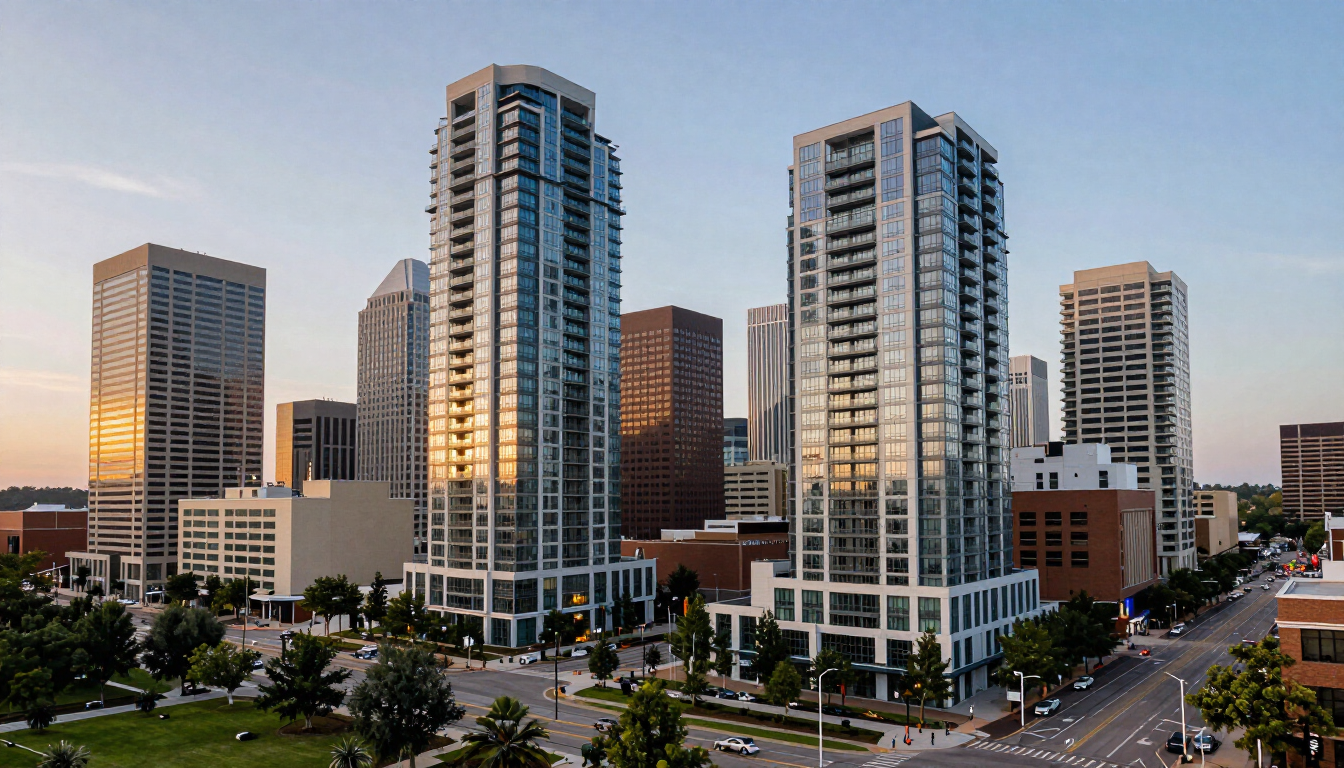
Moving From Washington DC to Charlotte
From Capital Region Density and Traffic to Space, Shorter Commutes, and a Banking Hub
Washington DC buyers relocating to Charlotte are often drawn by a combination of factors: a serious corporate and financial culture, a materially lower cost of living, shorter commutes, and the space and lot sizes that have become scarce and expensive across the DC metro. Charlotte is a natural fit for professionals leaving the capital region — particularly those in finance, law, consulting, and government-adjacent industries.
This guide covers how the housing and lot sizes compare, the lifestyle and climate differences, the commute and airport picture, which Charlotte neighborhoods map onto DC-area sensibilities, and the business environment that makes Charlotte a credible destination for ambitious professionals.
Housing and Space
The DC metro — from Northwest DC and Bethesda to McLean, Great Falls, and Potomac — is one of the country's most expensive housing markets. Charlotte offers a materially different value proposition. A budget that secures a luxury home on a tight lot in a premier DC suburb will, in Charlotte, typically secure a comparable or larger home on a substantially larger lot in a premier neighborhood.
The architectural character is different — Charlotte's best homes lean toward custom traditional and transitional styles rather than the brick colonials and stone manors that define the DC market — but the quality and appointment level is equivalent. The key change is land: half-acre to multi-acre lots are standard in Charlotte's estate neighborhoods, where they are exceptional in the DC metro.
Commuting: The Single Biggest Lifestyle Upgrade
For DC buyers, the commute change is often the most appreciated aspect of the move. The DC metro has some of the worst traffic in the United States, and a 60-to-90-minute commute is routine for suburban luxury buyers. In Charlotte, a typical commute from a premier south Charlotte neighborhood to Uptown is 20 to 30 minutes.
This is not a marginal improvement. It is a daily life change. The hours reclaimed from commuting — five to ten hours per week for many DC relocators — translate directly into family time, exercise, and a calmer baseline. Charlotte is a car city, and traffic exists and is growing, but it does not approach the routine severity of the Capital Beltway, I-66, or the Dulles corridor.
Lifestyle and Political Climate
Charlotte is a corporate city, not a government city, and the cultural difference is real. The professional culture is serious and ambitious — Charlotte is the second-largest banking center in the United States — but the conversation is business and finance rather than politics and policy. For DC professionals who are ready to step back from the political atmosphere of the capital, this is often a welcome change.
Charlotte's cultural and dining scene has grown substantially and is more developed than newcomers often expect, though it does not match the sheer density of options that the DC metro provides. The pace is calmer, the logistics are easier, and the daily friction is lower.
Climate
Charlotte's climate is a moderate upgrade for most DC buyers. Winters are milder — snow is infrequent and light, and the cold season is shorter and brighter than the DC winter. Spring and fall are long and beautiful, with Charlotte's tree canopy providing dramatic seasonal color.
Summers are warmer and more humid than DC, with a longer hot season from late May through September. DC buyers accustomed to the region's humid summers will find Charlotte's similar but more sustained. Air conditioning is essential, and pool season runs from May into October.
Neighborhoods for DC Buyers
DC buyers coming from Northwest DC or close-in Bethesda often feel at home in Myers Park and Dilworth — walkable, established, in-town neighborhoods with character architecture. Buyers from McLean, Great Falls, or Potomac seeking estate living on large lots gravitate to Foxcroft, Providence Plantation, and the Union County communities of Weddington and Marvin.
SouthPark offers a hybrid — luxury condos, high-end retail, and professional density — that appeals to buyers who want urban convenience without the suburban commute. And for buyers seeking a lifestyle change, Lake Norman offers waterfront estate living with no DC equivalent.
Business Environment and Airport Access
Charlotte is the second-largest banking center in the United States, home to Bank of America's headquarters and major operations for Truist, Wells Fargo, and a deep ecosystem of asset managers, fintech firms, and professional services. For DC professionals in finance, law, and consulting, the corporate culture is credible and serious.
Charlotte Douglas International Airport is a major American Airlines hub with direct flights to nearly every major domestic market and growing international service. It is roughly 20 minutes from south Charlotte and is a far easier airport experience than Reagan National, Dulles, or BWI — a meaningful improvement for frequent travelers, with the bonus of a direct flight back to DC when needed.
Moving From Washington DC — Common Questions
For most affluent DC buyers, yes. Charlotte offers a serious corporate culture, materially larger homes and lots, dramatically shorter commutes, a lower cost of living, and a major hub airport. The trade-off is less density of cultural options and a business rather than government culture.
Substantially shorter. A typical commute from a premier south Charlotte neighborhood to Uptown is 20 to 30 minutes, versus 60 to 90 minutes that is routine for DC suburban luxury buyers. This is often the most appreciated change of the move.
Myers Park and Dilworth are the closest analogues — walkable, established, in-town neighborhoods with character architecture. SouthPark offers a hybrid of urban convenience and professional density.
Foxcroft and Providence Plantation in south Charlotte offer custom estates on generous lots. Weddington and Marvin in Union County offer multi-acre estate living — the closest analogue to McLean, Great Falls, or Potomac.
Charlotte Douglas International is a major American Airlines hub with direct flights to nearly every major domestic market and growing international service. It is roughly 20 minutes from south Charlotte and far easier to navigate than the DC-area airports, with direct flights back to DC.
Charlotte is a corporate and banking city, not a government city. The professional culture is serious and ambitious — it is the second-largest banking center in the US — but the conversation is business and finance rather than politics and policy.
Milder. Snow is infrequent and light and typically melts within days. Summers are warmer and more humid with a longer hot season, but spring and fall are long and beautiful.
Yes. Lake Norman, about 30 minutes north of Uptown, is the primary waterfront luxury market, with private docks and waterfront estates in Cornelius, Davidson, and Mooresville — a lifestyle with no DC equivalent.
Related Charlotte Neighborhoods & Guides
Planning a Move From Washington DC?
Our luxury relocation specialists work with buyers moving to Charlotte from across the country. Request a private consultation to discuss neighborhoods, timing, and current opportunities.