Moving From Connecticut to Charlotte
From Greenwich-Era Estate Values to Charlotte's Tree-Canopied In-Town Prestige
Connecticut buyers — particularly those from Fairfield County and the Hartford-area suburbs — relocate to Charlotte for a familiar reason: the desire to convert substantial home equity and a high cost of living into more space, a lower tax burden, and a lighter daily footprint, without sacrificing the estate character and school quality they value.
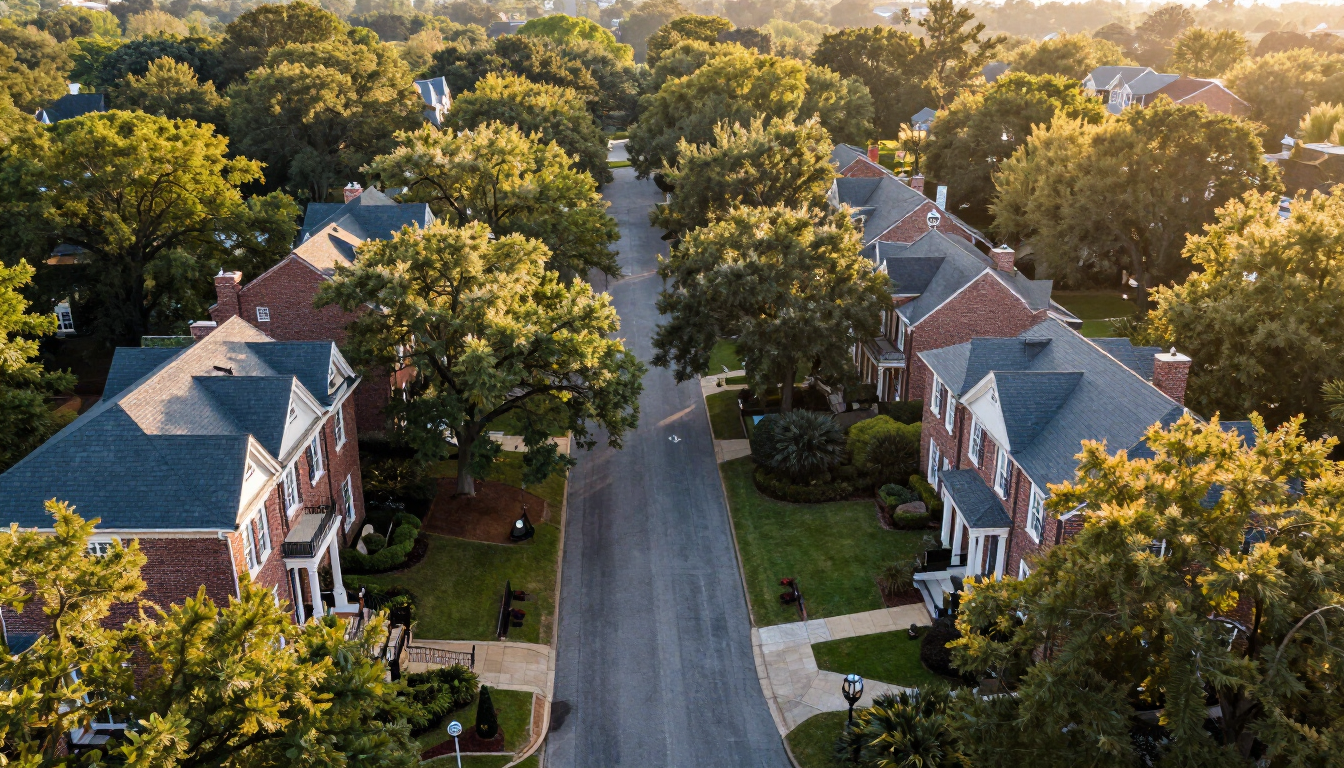
Charlotte is a remarkably good fit for Connecticut sensibilities. The tree-canopied streets of Myers Park and Eastover echo the established residential character that Connecticut buyers prize. The estate lots of Foxcroft and the Union County communities offer the acreage that has become scarce and expensive in southern Connecticut. This guide covers the housing, lifestyle, climate, school, and neighborhood comparisons that matter most to affluent Connecticut relocators.
Estate Housing and Lot Sizes
Connecticut's luxury market — from Greenwich and New Canaan to West Hartford and Avon — is defined by stone colonials, generous lots, and architectural permanence. Charlotte's best neighborhoods offer a direct analogue. Myers Park and Eastover feature stately early-twentieth-century architecture on established lots; Foxcroft and Providence Plantation offer custom estates on wooded half-acre-plus lots; and Weddington and Marvin deliver the multi-acre estate living that Connecticut buyers often seek.
The differential is meaningful. A budget that secures a well-appointed home on a tight lot in lower Fairfield County will, in Charlotte, typically secure a larger or comparable home on a substantially larger lot in a premier neighborhood. The architectural quality is equivalent — Charlotte's custom builders and established homes are well-detailed and appointed — and the land component is where the value differential is most felt.
Tax Structure and Carrying Costs
Connecticut's tax environment — high property taxes, a state income tax with a top bracket, and a state estate tax — is a primary driver of relocation for high-net-worth residents. North Carolina offers a structurally different picture: a flat, low state income tax, no state estate or inheritance tax, and property tax rates that are materially lower than Connecticut's on comparable homes.
We do not quote specific figures because tax rates and assessments vary and change. The consistent finding among Connecticut relocators is that the overall carrying cost of a comparable or larger home drops substantially. For retirees and pre-retirees in particular, the absence of a state estate tax is a meaningful planning consideration. Consult a tax advisor for specifics.
Lifestyle and Pace
Connecticut buyers often describe the appeal of Charlotte as "the same quality of life with less friction." The corporate culture is serious — Charlotte is a major banking center — but the daily pace is calmer. Commutes are shorter, logistics are easier, and weekends are less compressed by the demands of managing a high-cost suburban life.
What Charlotte does not offer is the New York proximity that defines Fairfield County. Buyers for whom regular access to Manhattan is essential should weigh this carefully. Charlotte's airport is excellent and frequent fliers manage the distance well, but it is not a train ride to Grand Central. For buyers who are ready to step back from that proximity, Charlotte is a natural fit.
Climate
Charlotte's climate is a clear upgrade for most Connecticut buyers. Winters are mild — the long, cold Connecticut winter is replaced by a shorter, brighter cold season with infrequent light snow. Spring and fall are extended and beautiful, with Charlotte's mature tree canopy providing dramatic seasonal color comparable to Connecticut's renowned foliage.
Summers are warmer and more humid than Connecticut, with a longer hot season from late May through September. Air conditioning is essential, and pool season runs from May into October. The net is a longer outdoor and entertaining season and a dramatically easier winter.
Schools: Public and Private
Connecticut buyers are often coming from highly-rated public districts or established private schools. Charlotte offers credible options on both sides. Union County — Weddington, Marvin, Waxhaw — is known for highly-rated public schools and is the natural fit for families prioritizing public education. Charlotte's private school ecosystem is deep, with several nationally-recognized independent schools concentrated near the Myers Park and south Charlotte corridors.
For families relocating from Connecticut's strong public districts or prep schools, the combination of Union County public schools or Charlotte private schools provides options that meet a high standard.
Neighborhoods for Connecticut Buyers
Connecticut buyers seeking the established, tree-canopied estate character of a Greenwich or New Canaan tend to feel at home in Myers Park and Eastover — Charlotte's most prestigious in-town neighborhoods. Buyers wanting larger lots and a quieter residential scale gravitate to Foxcroft and Providence Plantation in south Charlotte.
For families prioritizing top public schools and acreage, Weddington and Marvin in Union County are the closest analogue to a premier Connecticut suburban town. And for buyers seeking a complete lifestyle change, Lake Norman offers waterfront estate living with no Connecticut equivalent.
Lake Norman and Airport Access
Lake Norman is the asset that most surprises Connecticut buyers. Thirty minutes north of Uptown, it offers waterfront estates with private docks and a resort lifestyle that simply does not exist within reach of the Connecticut market. Many Connecticut relocators end up owning both an in-town Charlotte home and a Lake Norman property.
Charlotte Douglas International Airport is a major American Airlines hub with direct flights to nearly every major domestic market and growing international service. It is roughly 20 minutes from south Charlotte and is a far easier airport experience than the New York-area airports — a meaningful improvement for Connecticut buyers accustomed to the drive to JFK, Newark, or Bradley.
Moving From Connecticut — Common Questions
For most affluent Connecticut buyers, yes. Charlotte offers estate-character housing on larger lots, a materially lower tax burden, strong schools, a major hub airport, and a calmer daily pace. The main trade-off is the loss of easy New York proximity.
Myers Park and Eastover are the closest analogues — tree-canopied streets, stately architecture, established prestige, and a quiet residential character. Foxcroft and Providence Plantation offer larger lots for buyers seeking more space.
No. North Carolina has no state-level estate or inheritance tax, which is a meaningful change for high-net-worth Connecticut residents. Consult a tax advisor for how this applies to your situation.
Charlotte offers strong options on both sides. Union County public schools (Weddington, Marvin, Waxhaw) are highly rated, and Charlotte has a deep private school ecosystem with several nationally-recognized independent schools.
Charlotte Douglas International is a major American Airlines hub with direct flights to nearly every major domestic market and growing international service. It is roughly 20 minutes from south Charlotte and far easier to navigate than JFK, Newark, or the drive from Connecticut to those airports.
Much milder. Snow is infrequent and light and typically melts within days. Summers are warmer and more humid with a longer hot season, but spring and fall are long and beautiful with dramatic foliage.
Lake Norman, about 30 minutes north of Uptown, is the primary waterfront luxury market, with private docks and waterfront estates in Cornelius, Davidson, and Mooresville. There is no Connecticut equivalent.
Yes. Charlotte is a car city, though commutes are typically shorter and traffic is modest. Most luxury buyers drive; the LYNX light rail serves the south corridor but is not a substitute for a car.
Related Charlotte Neighborhoods & Guides
Planning a Move From Connecticut?
Our luxury relocation specialists work with buyers moving to Charlotte from across the country. Request a private consultation to discuss neighborhoods, timing, and current opportunities.